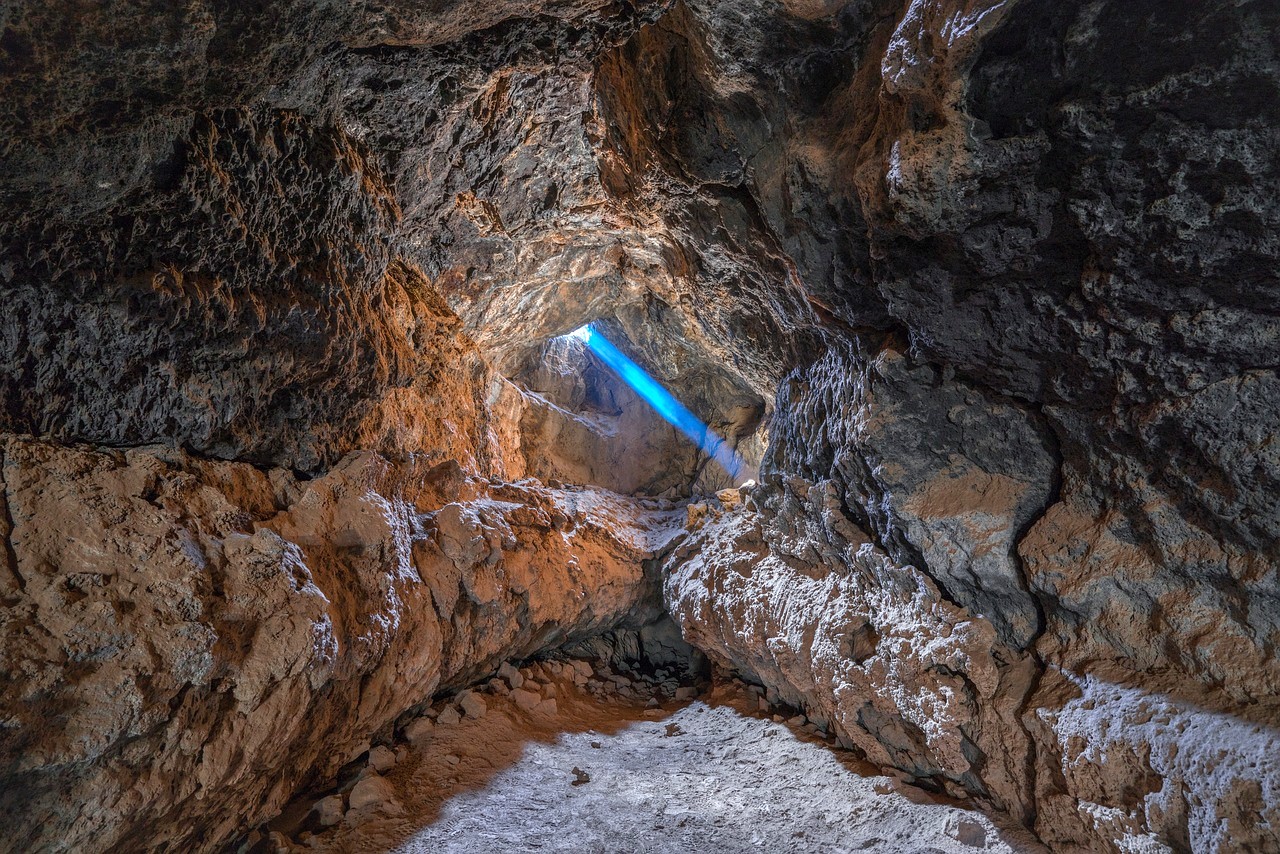
We venture into unknown spaces of our long-neglected heart. We discover that itholds the most preciousgift that we possess and that it is guarded by forces that terrify us.
We humans tell each other stories, and in them we often talk about things that are difficult to express directly—because it would be too complicated, and because we lack the words. Sometimes, among the many stories, plots, narratives, novels, and reports, we find something that touches us in a unique way. We feel that a truth is being expressed, one that concerns us. Even if the events are far removed from our own lives, the metaphor strikes a chord, and we are moved.
“Io non ho paura” is the title of a book by Niccolò Ammaniti and of the film based on it by Gabriele Salvatores:” I’m Not Scared”.
The story takes place in the 1970s, in one of the poorest regions of Italy. There is nothing but endless hills covered in wheat, dotted here and there with a few houses, some of which didn’t even have electricity in those days. The summer sun burns mercilessly from a bright blue sky, numbing everything. No sensible adult leaves the house before six in the evening. Only a group of children are out and about among the fields. We can imagine being one of these children, a boy of about 10 years old.
It’s very hot, there’s nothing to do, and you have three months of summer vacation (that’s how it is in Italy). You have a little sister who is incredibly smart, but unfortunately also incredibly nearsighted, so you have to keep an eye on her all day long.
From time to time, you and your friends spend the long, dry days in an empty house that must once have been much more magnificent than your parents’ homes. Now it stands empty and dilapidated, and you climb up to the attic, hide in the chambers, and explore the rooms.
On the day this story begins, you accomplish a double feat.
First, you saved a chubby, awkward girl who had joined your group from having to take part in a test of courage by volunteering to do it yourself. And second, you balanced your way across the large roof beam blindfolded. If you had fallen, you would have broken every bone in your body.
The third feat of courage you demand of yourself occurs in the evening. Your little sister has lost her glasses somewhere, and you go back to the empty house—alone—to look for them. It takes a lot of courage to overcome your fear. Because it’s one thing to balance on a beam when your friends are there, but it’s quite another to go to the old house all by yourself at dusk, with all its noises and smells, its stairs and doors, and the rusty barbed wire around it. But you’re responsible for your sister, so you do it. The glasses are soon found.
But then something else is found. You discover something much more disturbing than you could ever have imagined. The glasses are lying on a corrugated iron sheet, which is covering a ground hole, a kind of underground cave. You see this when you lift the sheet, fearful but also curious. Down there, in the dim light, you see earth, a puddle of water, a few old tin cans, dirty, holey blankets and—a white, rather small leg sticking out of one of the blankets.
You drop the metal sheet, and it bangs down on the opening. There’s something lying there. There’s somebody lying there. You want to run away, but then you try to be brave, like you showed the others, and slowly lift the cover again, as if it were very heavy. And your heart starts beating like crazy. Because you know for sure that you just saw that leg. And now it’s gone. That’s enough. You grab the glasses, jump up, and run away as fast as your feet will carry you. Something is wrong down there, and you don’t want anything to do with it.
When you get home in the evening, another surprise is waiting for you. Your father, who has been away on “business” for weeks, as he says, has come home. He has brought with him an unpleasant gentleman from the north who claims to be his friend, but you can’t be fooled. This gentleman must somehow be your father’s boss. But what kind of business is it? Your father seems in a great mood. He arm wrestles with you, defends you when it comes to why your sister’s glasses are broken, and eventually, he even wants to sing with you!
You sleep badly that night, not only because you’ve been kicked out of your tiny chamber to make room for the supposed acquaintance, but also because you keep dreaming about that hole, that hole in the ground where something lies, dead or alive, but definitely human-like.
This brings us to your fourth heroic deed (there are more to come). The next day, you find yourself back at the beautiful, lonely, eerie house, alone and without telling anyone else. You kneel down, take a deep breath, and lift the metal lid covering the mysterious hole. There is nothing to see except the wet floor, the old blankets, and the rusty cans.
Where do you find the courage to kneel alone in front of the unknown and call out to it? “Hello!” you shout into the hole in the ground. And then you listen, so as not to miss the slightest sound, not even the faintest hint of a response, you are all ears – and right in front of you, without a sound, a face appears, the likes of which you have never seen before.
It is white, as if it has never seen the sun, surrounded by a tangle of golden spines that, after much, much washing, might have once been blonde hair. The creature in front of you has closed, sticky eyes, as if it has been weeping for years. In sheer terror, you drop the metal sheet, jump up from your crouching position and run backwards, away from the house, out of its spell, across the fields under the scorching sun, over hill and dale, and arrive home! But even there you find no peace. The stranger, your father, your mother, they are all sitting in the kitchen in a weird mood and dismiss you, brusquely. And through the half-open door you hear the news talking about a kidnapped child, a special child, a child of rich parents who begs the kidnappers not to hurt him and to let him go. And suddenly you understand what you saw, and it hits you like a blow.
There are images, symbols, and references that are so old that everyone can understand them. When we think of the captive child of noble birth, we may think of the seed of the new, original human being that lies dormant in our hearts. And, assuming this is true, we find in this story a reflection of the path of heroism that every human being can follow. In the beautiful but dilapidated house, we rediscover the place of the heart, the place where feelings reign. This is where courage and fear are at home, where friendship and the feeling of freedom are found. In the course of the story, we also encounter love and discover that it can be a force that overcomes everything else. The parents, in this story, are the embodiment of the past. In them—that is, in the atoms, cells, and organs of our bodies—human history lives on, with all the tricks and strategies that humans have devised in their struggle for existence. We have inherited them, they are part of us, and they continue to grow, develop, and solidify within us—until one day the “hero” appears.
Let’s put ourselves back in the shoes of the hero of our simple story.
You have realized that the creature in the pit is not scary or threatening, even though it seemed very strange to you at first. You understand that it is trapped. You start to wonder whether it has anything to eat or drink, and whether it will die if you don’t help it. And it’s natural for you to visit the pantry the next day—secretly, because your family is poor and can’t really spare anything—you take something out of the pantry and go to the dungeon in the old house. But now that you want to do something for the trapped child, you realize that it won’t let you help it. It withdraws, hides under the blankets, doesn’t answer. (You lower your food package on a rope, fill an old tin with water in the house and lower it down too. You have no choice but to trust that your help is right and will be accepted.
What follows now we will describe only briefly, leaving the rest to your imagination.
Because from now on, of course, you come every day. You bring food and find a way to talk with the prisoner. You are caught looting the pantry and decide to sacrifice your meager savings to buy bread and chocolate. The child is convinced that it is dead and thinks you are an angel. But it begins to trust you. You realize that you are the same age.
And, without being aware of it, you have dedicated your entire life to helping it.
You climb down into the hole with a rope and take care of the prisoner. And when you climb back out in the evening and go home to what is surely a better dinner and a softer bed, it almost breaks your heart to leave the bright creature behind in the dark hole.
You’ve thought about freeing it, of course,but that’s not possible
Because your father’s supposed friend is … the child’s kidnapper. And your own father has the task of keeping it captive and providing it with just enough care. You heard this when you eavesdropped on a conversation between the adults. And now you’re really scared.
Still, the next day you find yourself back in the hole. The child has learned to look at the sun again, has accepted that he is not dead, and no longer thinks you are a good spirit, but a boy his own age—which, of course, you are.
You want to give him a day of freedom, at least that much. You take the child on your back, because it can’t walk well after spending so long crouching in the pit. And you carry this strange, close, mysterious being through the fields, over the hills, and you laugh together and rejoice in the light of the sun, which usually seemed so hostile to you.
And you forget everything, who you are, what happened to you, what will happen next. And only at the end, when the question arises aboutwhat we should do now do you realize that each of you must return to your place—the strange child to his prison and you back to your parents, who are helping to keep him captive. And there is nothing you can do about it.
Soon something terrible is added to this.The adults have noticed that their prisoner has been visited. They have taken him somewhere else. You hate that place. It’s a small farm with huge, squealing pigs and a fierce black dog that barks as soon as you come near. But at the same time, you learn that the situation is becoming increasingly dangerous. The adults are actually planning to “get rid of” their hostage, as they put it! Apparently, the police are on the kidnapper’s trail. And that breaks you out of your desperate inaction.
You have to free the prisoner before they do anything to him. You have to overcome all your comforts, all your fears, and all your reservations and do the only thing necessary.
So there comes a night when you set off. There is a nervous atmosphere in the house.
That’s why you can slip away unnoticed and, leaving all your fear behind you, sneak through the darkness to the small farmyard. You dare to approach the dog and discover that although it is fierce, it is also rather stupid. The pigs that were so loud during the day don’t care about you because they are asleep. And so, before the adults reach the prison of the unknown child, you stand in front of a thoroughly barricaded gate and call out in a hushed voice. Even when there is no answer, you don’t have a moment’s doubt.
You climb over the gate, with nothing else in your mind but helping the prisoner. You find the child in the shack, weak, silent, and without hope. You talk to him, persuade him to trust his legs and take a few steps. And then you stand inside at the high gate, and there is no other way to free the child from this prison other than to lift him up, half carrying him, half supporting him, and with your encouragement, he finally climbs over the gate, lets himself down on the other side, and is free!
You’ve done it!
It only takes a moment for you to realize that now you are trapped. You cannot climb over this gate without help. Your fate is sealed. The adults will come to “dispose” of the child they find. Imagine that! Your own father!
This story will turn out well. For us, it ends here. The essentials have been said. Against the forces of his own origins, against old fears, and against all odds, this captive, weakened, and very special child has been freed. This was achieved because the hero no longer thought of himself in any way. Love and the realization that no one else could help were stronger than everything else. They were so strong that the courage emerged from them to venture into the second place of the dark inner world, a place that was even more frightening than the first.
This will also be our heroic journey. We venture into unknown spaces of our long-neglected heart. We discover that it holds the most precious gift that we possess. And that it is guarded by forces that terrify us. These forces have determined our identity. We recognize what is suffering. We do what must be done.
And so, in the end, the child, we, the new human being, stands before his jailer, the face of his earthly reality. In the light and strength of courage, he has overcome himself. And he can say:
I’m not scared. (I’m sacred.)