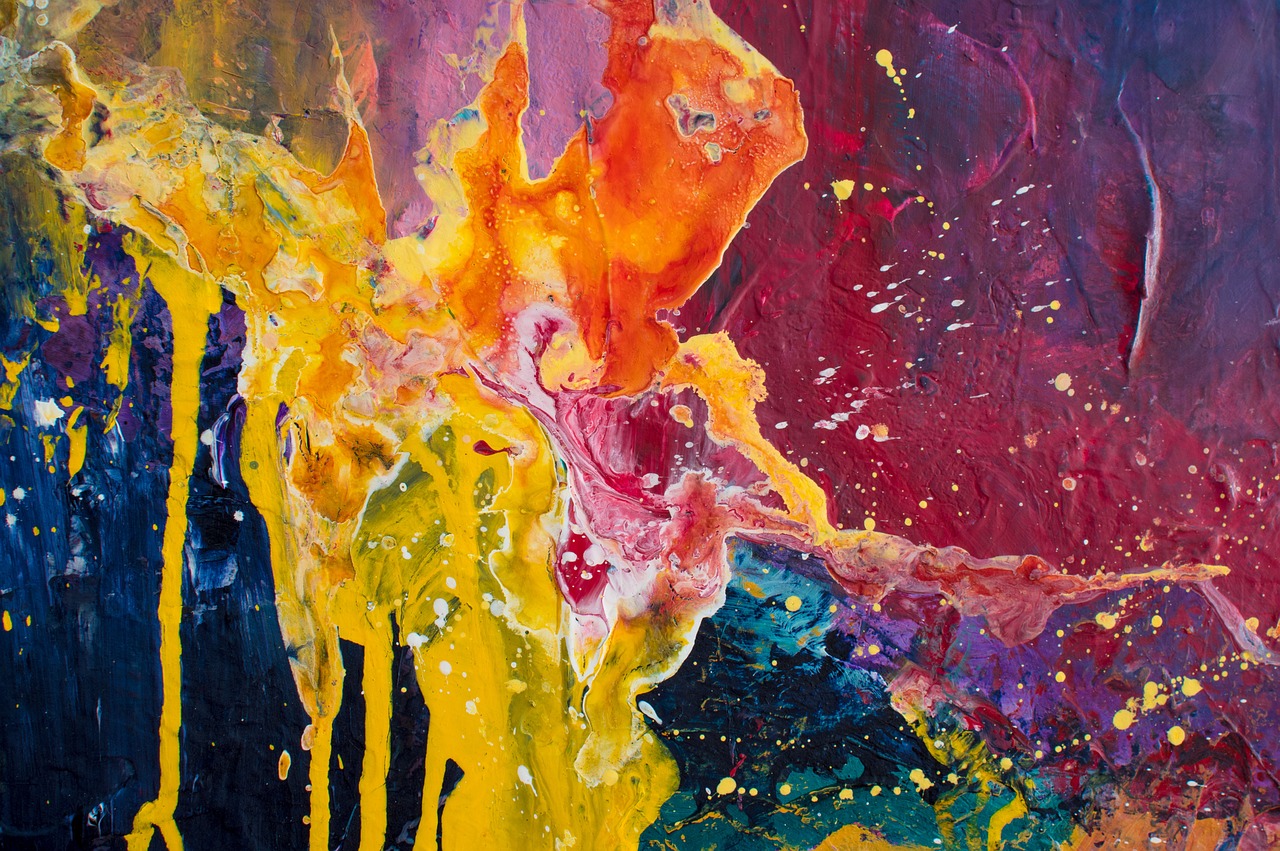
Here could be where the magic happens: in the unintentional and yet irresistible urge to create. The artist has taken the step into the void.
He has fought for this freedom and when he bears witness to it, a beauty emerges that is not absolute, perfect, complete or final, but unsettling, strange, questioning.
In Nature, we can experience the greatest beauty, but this article is about human creativity, culture, and therefore, also about deficiency; about the imperfect above all.
There is this striving for perfection in art, and it results in works that are balanced, harmonious, expressive, valid, timeless, uplifting, moving, enlightening and as strong and solid as the stone from which many of them were made. Form and content are well-balanced, and the artist not only shows a deeper understanding of technique, but also of a spiritual perception, both of the respective subject and of human nature.
Piero della Francesca
When I first saw reproductions of Piero della Francesca’s frescoes[1], I was deeply moved. This was at a time when I had already begun to work professionally with design, and, of course, I was familiar with works from the early Renaissance period. For us, Botticelli was one of the first ‘perfect’ painters, who had form and content, technique and emotion under control.
But what was Piero, who was only 20 or 25 years older, creating at that time? Something appeared ‘off’ in his creations. Images of people, obviously based on living models, standing and sitting in rooms and landscapes that looked and were constructed. The colours have a strange sheen, as if the fabrics were glowing from within. Light and shadow are set and are coherent, but they are not alive, not natural, as if the Tuscan light had been frozen. What fascinated me most were the faces of the persons portrayed. They look out at the viewer with an uncanny calmness, and give you the feeling that you are recognized in your struggle through life, and looked at from another world. It seems as if these figures have already left this struggle behind, and are calmly awaiting their destiny. It is these images that moved me to the core. What distinguishes these from the other Renaissance art that I appreciate and love? I have not solved this mystery up to this moment.
Cy Twombly
In Munich, you can visit a cube like museum building that, behind its elaborate multi-coloured façade, holds a similar and completely different secret, one that today, is closer to me. On the upper floor, visitors will normally turn around at the end of the wide oak staircase and head for the ‘Lepanto’ room. Here, 12 large canvases, on which someone has wildly drawn signs with a long brush, hang on a U-shaped wall curved around the visitor in a high room.
The colours are rich in contrast: a light, watery blue-green, a red that flows between a flower and blood; a pale, somewhat caustic yellow. Everywhere you can see the traces of paint that have run down the canvas like tears, beginning furiously, or at any rate, quickly slapped shapes reminiscent of eyes or ships. Some of the paintings bear only spots of colour, like splashes or multicoloured wounds on the picture surface; here, too, the paint has run down from the point of its appearance on the canvas to the lower edge of the picture, leaving a multitude of parallel lesions. It is violent, it is wild. At the same time, it is sublime. But is it beautiful?
From the perspective of the viewer, the mind begins to flicker between different levels of perception, at least that is how I experience it. You are informed that the naval battle of Lepanto is depicted here, and you inevitably try to decode the images on some level: this looks like a fleet of ships from above; this could be the impact of cannons; are these the closed eyes of the dead floating in the water? At the same time, you notice the colours and contrasts. They are indeed beautiful, there is a light in these pictures, a depth that is also fascinating. From a distance, they really are seascapes in an almost classical sense. Up close, you can see the glazed layers of paint on the texture of the canvas, the knots and dots of colour, and you simply wonder why it looks so beautiful and what this beauty has to do with the subject.
On another level, you analyze the whole setting: a building costing millions, with a hall just for these pictures, designed by the best architects and executed with the finest materials: is that appropriate?
Ultimately, perhaps these are not works of art, but merely the results of an act of creation – by someone who uses the tools of a painter but does not use the technique, or perhaps does not even master it?
Cy Twombly[2] : daubing, children’s scribbles, graffiti (as in restrooms). Charlatan, opportunist, profiteer. You can read and hear a lot about abstract expressionism, and Twombly in particular is often cited as a prime example of an art market in which absurdly high prices in the millions are paid for the daubings of non-skilled artists.
And it is precisely this word ‘non-skilled’ that could bring us closer to what Twombly tried to do throughout his life. His entire oeuvre draws its strength from the tension between two poles: on the one hand, the completely individual act of creation, beholden to nothing and no one, the ‘unlearning’ of skill, the relinquishment – even rejection – of control over the pictorial process; on the other hand, the will, the inner necessity perhaps, to create something supra-personal, something – let’s call it legendary. Twombly’s personality is intangible. Where he is publicly visible, he stages himself. He takes his themes from classical myths. For him, the act of painting is not a reflected creative act, planned over a long period of time, but rather the release of a previously deliberately built up and experienced tension, like winding a spring mechanism further and further, which then suddenly jumps out of its housing and releases the accumulated energy.
The result cannot be grasped cognitively.
The Lepanto Hall forms one end of the building. In the middle of the floor layout, the visitor finds something else. When you enter this room, perhaps with a small group of people who attach a special meaning to the symbol of the rose, something of a miracle happens. The Rose Room has only skylights, so it seems to glow from within. All the walls have huge canvases with rows of stylized rose blossoms in different colours. The atmosphere vibrates. You can see that there are verses scribbled on the canvases, rose verses, and you immediately have the feeling that these verses must be recited, sung, spoken aloud urgently, immediately and without fail. The first time, it was an almost physical experience, the urge to recite was followed by the need to dance. You want to dissolve in this space. It is a shattering experience of beauty.
At the same time, these pictures are not beautiful. One of the short walls, for example, bears a row of four red roses, but the fourth has a ‘ghost’ in a corrosive green, a trembling image superimposed on it. You don’t know whether to laugh or cry. It’s wrong, says the mind, and at the same time it has a poetic quality that cannot be explained. The countless roses in this room pose questions to the viewer, no, they pose the viewer before their own questions. The scribbled verses, by Rilke or Bachmann, do nothing to answer these questions; they only provide a diffuse dimension of sublimity. And these pictures are absolutely sublime in all their artlessness.
No beautifully painted depiction of a rose could unfold this power. No painting, however cleverly charged with symbolic content, could move the viewer like this. Twombly was 80 when he painted these 3 meter high, and 10 meter long surfaces using large brushes tied to long poles. One can think of it as a tour de force, indeed the last such endeavour undertaken by the painter. And the fact that we see a kind of legacy here can also be deduced from the fact that this series of works was created specifically for this room and donated to the museum. This is background knowledge – but the experience, you either feel it or you don’t. ”If you don’t feel it you won’t catch it” (Goethe in Faust).
Why is it that these images, above all, move me so? Why are there people who enter the Rose Room like a temple and hardly want to leave – while others feel nothing there, or even anger and disappointment? And what does Piero have to do with it? Why can the ambiguous, the insufficient, the imperfect shake us so much?
If the artist manages to disappear behind his work, then something of greater significance happens. Individual expression, something that Western art has been seeking since the Renaissance at the latest, now plays no role. The motivation to create comes from outside the personality. What’s more, the personality disappears in the act of creativity, in the expression of something general; it sacrifices itself without knowing what for. This automatically becomes a spiritual process, even if it is not intended as such. Here could be where the magic happens: in the unintentional and yet irresistible urge to create. The artist has taken the step into the void that I myself have yet to take. He has fought for this freedom and when he bears witness to it, a beauty emerges that is not absolute, perfect, complete or final, but unsettling, strange, questioning.
But allowing yourself to be seized by this kind of beauty, no matter where you encounter it, could be a key to meaning.
[1] Piero della Francesca (actually Pietro di Benedetto dei Franceschi, also known as Pietro Borghese); born around 1410-1420 in Borgo San Sepolcro; buried there on October 12, 1492 was an Italian painter, art theorist and mathematician from the early Renaissance period.
[2] Cy Twombly (real name: Edwin Parker Twombly Jr.); born April 25, 1928 in Lexington, Virginia; died July 5, 2011 in Rome, Italy was an American painter, photographer and object artist. He is one of the most important representatives of abstract expressionism.