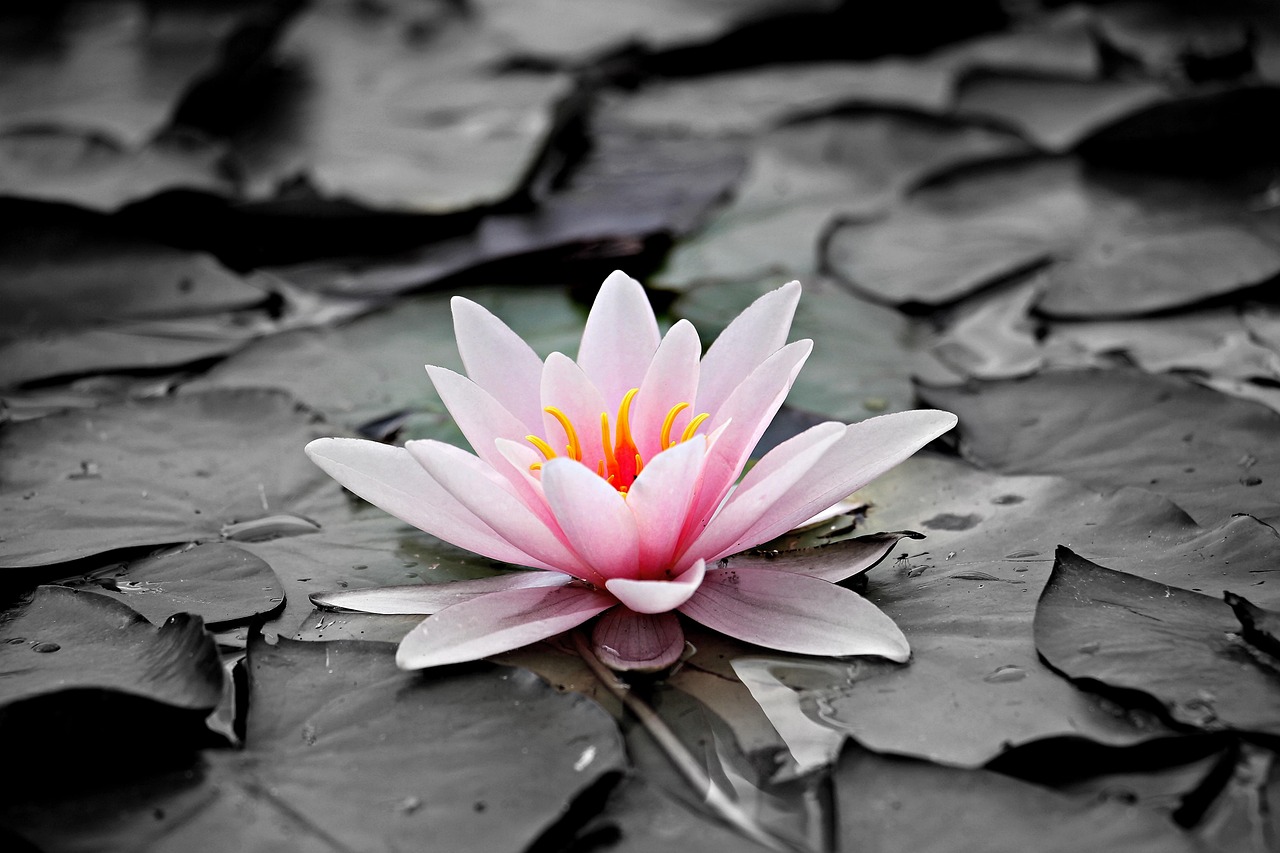
Beauty is a feeling or perhaps a sensation which spontaneously grasps our attention. Its essence leads to the depths of spiritual experience.There are depths where light and darkness mix.
Without black earth, no beautiful, fragrant flower will appear; no gold without dark, hard stone and poisonous vapour; and thus no light without darkness. For this is the only way and means of revealing all the secrets of God.
So God has also formed you, Dear Soul, in his image, that you may be his likeness, his image and inheritance, and open up the wonders of his kingdom” (Introduction to Forty Questions from the Soul by Jacob Böhme).
Flowers, gold or light are perceived as beautiful, attractive, or are used as raw materials to create beautiful things. In culture, beauty is very diverse, somewhat intangible, and often tied to individual perceptions.
In a conversation about the ideals of beauty and values, an illustrator who used to work in advertising, thought that in ancient cultures beauty was shaped by religion. This role is now taken over by advertising.
In a religious context, beauty deals with harmonious spiritual growth or with the divine shining through a beautiful person, a work of art or a building. It may play a role to the extent in which the artist has realised the proportions of the golden ratio, ubiquitous in nature. The ideals of beauty in advertising develop according to the same laws in order to persuade people to take a materialistic action.
In the philosophical tradition, many thinkers have dealt with beauty. In Phaedrus and The Banquet, Plato has the attendees discuss the topic of beauty. If one wanted to recognise a central theme in the conversation, it runs from external beauty to beauty “in itself” as a supra-individual characteristic, as a force or fascination that radiates from the “One” from the world of ideas. According to Plato, this beauty can only be grasped in thought and through reason.
An interesting image of beauty can again be found in Jacob Böhme’s
introduction to Forty Questions about the Soul:
Without black soil, no beautiful fragrant flower will appear, […] and no light without darkness.
In the Buddhist tradition, there is the saying:
no swamp, no lotus.
According to Böhme, beauty is the product of a dual world, that of light and of darkness. Beauty manifests itself in different ways to each. The world of darkness was formed when the angel Lucifer, whom Jacob Böhme describes as the most beautiful image of God, began to detach himself from the divine world of ideas. He fell from unity through his refusal to serve divine revelation. As a result, a darkening occurred in his being. After the loss of his divine centre, a part of the divine world split off in a flash, a “big bang”, and became a world of darkness in which light and darkness, beauty and ugliness merge. Lucifer fell like a burning star from the sky. He and his followers became the core of the dark world. Original divine beauty is not an attribute but the essence of creation. Beauty in the now emerging human world became an antithesis to ugliness, the archetype of this polarity.
In the tension between darkness and light, the human world finally emerged. Its path of development aims to reunite what was separated at the beginning by the lightning. The flower in the black earth symbolises the soul, which in its god-forsaken world of thoughts, carries darkness within itself. Only through the connection with the divine light of the heart can its original beauty unfold again. Through experience and devotion, a new being emerges from this tension, that like the flower, strives towards light and blossoms in the sunlight of the divine world. The world of darkness serves as a matrix that brings the beauty of the soul to light.
In this vale of tears on earth, nothing is more necessary and useful to man than to get to know himself, what he is, where he is from, or where he wants to go. What he will become and where he will go when he dies. It is most useful for everyone to know this. For outward change remains in this world, but what the heart comprehends, the human being takes with him. (Jacob Böhme, Vom dreyfachen Leben des Menschen, 12: 1 (From the treefold Life of a human))
Through the fall of Lucifer, his beauty mutating into ugliness, becomes the core of the dark world and pushes invisible beauty through the longing of all living things for beauty back towards the light. In this way, a new beauty of Christ develops, which is absorbed into its origin through an ever deeper connection. The essence of this beauty is:”I and the Father are One” and is protected from the fall that Lucifer experienced. Beauty, as a disguise for ugliness, helps to open doors.
According to Simone Weil: “Beauty bewitches the flesh in order to gain permission to penetrate directly to the soul.”
Beauty reveals itself in our world in many ways. We all know its attraction and the quiet moments it can evoke. We experience it in the tension between beauty and ugliness, whereby ugliness is represented as an aspect of what is beautiful and attractive and in which the soul of Böhme’s dark world, due to its lack of purity, succumbs to again and again. At its core, the Dark World is divine. The essence of beauty and ugliness in it is also divine, but the difference from the origin becomes apparent when the soul becomes One with its origin again.
One symbol of original beauty is the “sea of glass”. It is the matrix from which, in connection with the spirit, the miracle of absolute beauty arises. The symbol for the sea of glass is water, which gives our planet its special beauty when viewed from space. Water is a symbol of the cleansing power the sea of glass exerts on the soul. In this cleansing process, the soul itself becomes a sea of glass by its very nature, and through its rebirth from water and spirit, the beauty of the ugliness dissolves, while the beautiful remains in only the beautiful.