And whom I love, I kill
Whoever seeks me finds me,
whoever finds me knows me,
whoever knows me loves me,
whoever loves me, I love,
whom I love, I kill,
whom I kill, I will reward.
For whomever I must reward, I am the reward.
This short and anonymous poem is, at first glance, both incomprehensible and disturbing, perhaps frightening to some. Yet, it holds a profound meaning that every seeker on the path to enlightenment must grasp.
In the following story from the twelfth century, we can see similarities with this anonymous poem, and its meaning is clearly presented.
I would like to introduce you to an ancient Persian story or poem by Farid al-Din Attar, who was born around 1145. Attar was one of the greatest mystical Sufi poets, leaving behind a large number of ghazals, or poems. He is also an important figure in medieval Persian classical literature. Unfortunately, he is not as well-known as Rumi and Hafez, who were very successful. Yet, he had an immense influence on later writers, and even Rumi was inspired by Attar.
Although he had an extensive oeuvre, Attar achieved world fame with just one work: The Conference of the Birds. This poem, or mathnavi, tells an allegory about a large group of birds searching for their mystical king, or Simurgh. This Simurgh is found throughout Persian literature. It is the mysterious bird, the manifestation of wisdom, and it holds the answers to all questions. It is this bird that returns the Persians, or indeed all of humanity, to its true identity and destiny.
Little is known about Attar’s life, and his work also lacks biographical information, as much of his oeuvre describes his spiritual journey. It is certain that he spent most of his life in his birthplace, Nishapur. Around 1220, he was murdered, along with many of his fellow townspeople, by the Mongol horde led by Genghis Khan, who stormed into the west from the east, wreaking havoc. The Mongols attempted to destroy Persia’s high culture, and many fled.
The name Attar literally means “perfumer” or “apothecary,” the business he inherited from his father.
A striking anecdote is the following:
One day, a wandering dervish enters his shop and asks him if he has prepared himself to leave this life. Attar is astonished by this question. The dervish suddenly dies and falls at his feet. Attar is so affected by this that he immediately closes the business and withdraws to a Sufi community for several years.
Conference of the birds
Once, long ago, all the birds gathered in a solemn and secret session to deliberate on a matter of utmost importance. From the beginning of creation, all the inhabitants of the cities had a king to guide them, but the birds lacked a leader and they felt this was a great loss. They were like an army without a general.
How could these weak, feathered souls hold their own in the struggle for daily existence? They were thus in a precarious situation and they felt they had to place themselves under the protection and guardianship of a king as soon as possible.
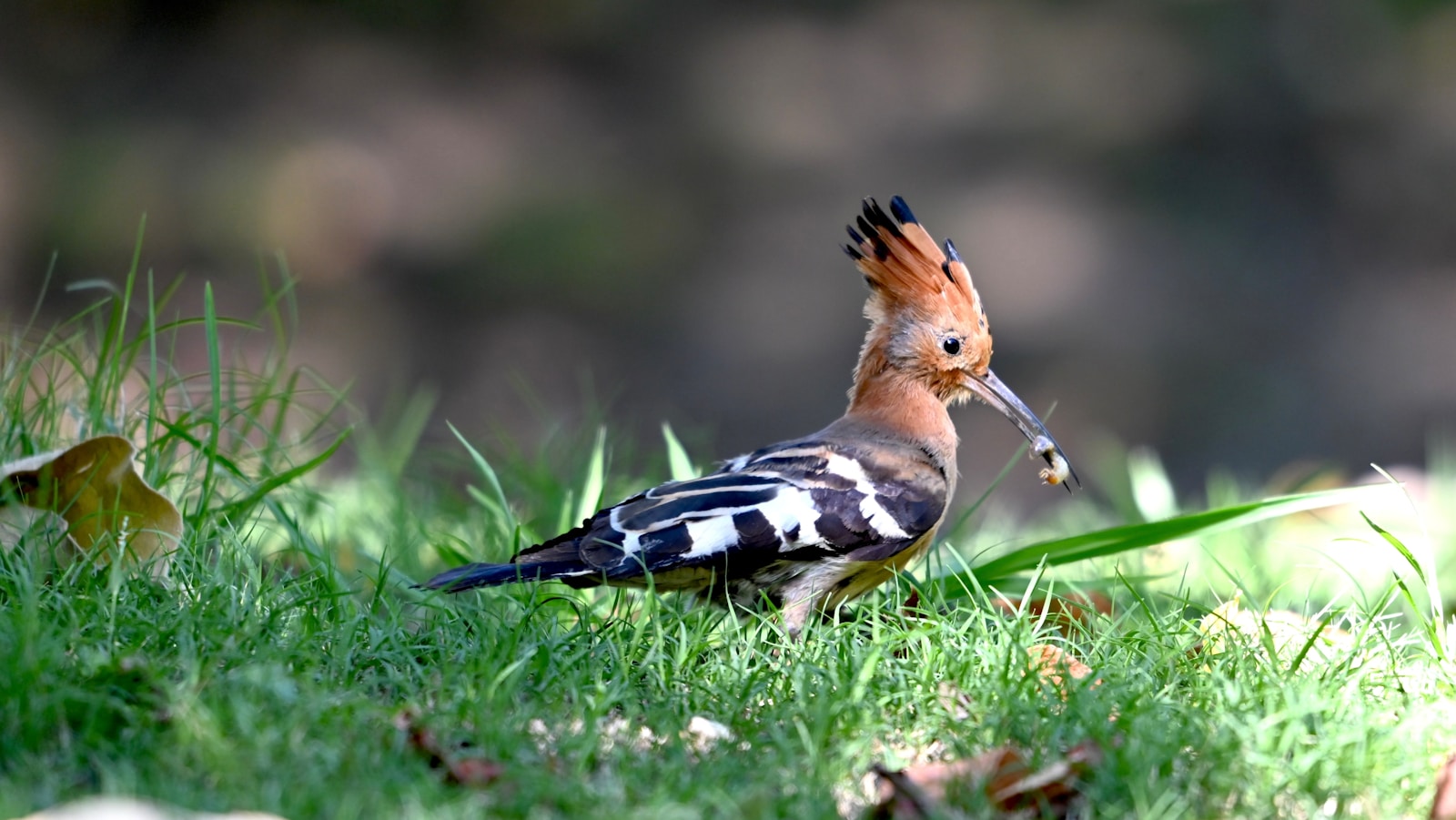
Then, full of ardor, the hoopoe, the Hud Hud, stepped forward. On its head, its crest shone like the crown of faith, on its beak it bore the name of the deity as hope, and on its chest, it wore the symbol of love.
“Dear birds,” he addressed the feathered souls, “I know the Lord God and the secrets of creation.” He told them that he had traveled the earth in the days of the Flood, had accompanied Solomon on his journeys through deserts and valleys, and had played a role as his trusted envoy at the meeting with the Queen of Sheba.
“We have a king, friends, and I also know where he is. However, I am unable to find him alone, but if you will accompany me, we will surely find this majesty whose name is the Simurgh. His dwelling place lies far beyond the Caucasus. He is near, but we are far, far from Him.”
The hoopoe continued his speech:
“The road to it is strewn with many obstacles. Hundreds of thousands of souls have passionately sought the Simurgh, but few are able to find Him. Souls ceaselessly strive to make their way to this Majesty, for they cannot live without Him.
“Exalted bravery, utter fearlessness, and complete self-effacement are needed to remove the obstacles,” the hoopoe continues. “We must strive valiantly to catch a glimpse of His face, and if we fail to greet the Beloved, this life is not worth living!” thus said the hoopoe.
These words immediately inspired the birds, and they wanted to set out on their journey without delay to behold the face of the Simurgh. At the same time, they also began to doubt their own abilities when they heard about the difficulties and whether they would be able to overcome the obstacles on the path.
The first to reconsider his decision was the nightingale, known for his passionate love for the rose and his captivating melodies for it.
“I am so completely drowned in the ocean of love for the rose that I have practically no life of my own left. Besides, how can a puny creature without much strength withstand the many difficulties of the journey? My love for the rose is enough for me.”
“Ah,” said the hoopoe, “you dwell solely on material appearances and outward beauty. You speak of love, but this is something different from the love you feel for the rose. Love for the rose will bring you thorns and sorrow, because it is ephemeral and has nothing to do with true love.”
After the hoopoe had thus reprimanded the nightingale, the peacock appeared, declaring himself unworthy to appear before the royal Simurgh because of his role in expelling Adam and Eve from Paradise.
Then came more feathered creatures, such as the duck who could not leave the water, the heron who would not leave the pools and ponds, and the owl who could not part with its ruins. Finally, came the falcon who could not relinquish the place of honor in the hands of counts and dukes.
The hoopoe swept away all their excuses one by one and encouraged her friends with inspiring anecdotes. To inspire and encourage the birds, he told the following story:
“One day, the Simurgh removed his veil from his face, his face shone like the sun, and he emitted millions of rays, all of which, by his grace, became birds. Yes, my friends, we are all sparks of the Simurgh! When you realize this secret, your relationship to the Simurgh will become very clear to you. However, do not reveal this connection to others; keep it to yourself. Now that you know whose reflection we are, life and death are the same for you.”
However, these were dark and metaphysical subtleties for the completely bewildered birds, and so he clarified his words with the following story:
“Once upon a time, there was a beautiful king with a perfect appearance. The greatest desire of his subjects was to admire the king’s face. Those who only thought of his beauty lost their senses, and those who tried to catch a glimpse of it gave up their lives. They couldn’t bear his beauty, but they couldn’t miss it either. Out of pity, the king decided to allow them to see his beauty through a mirror. In this way, he protected his people from the overwhelming rays of his beauty. So, in the mirror, they could still catch a glimpse of his exquisite beauty…
“If you now wish to admire the face of our beloved King Simurgh, I will tell you where you can see it,” the hoopoe continued. “You will be able to see him in the mirror of your own heart!”
This awakened in the hearts of the birds a deep longing to meet the Great Unknown King and to set out immediately. Yet, doubts about their ability to brave the dangers on the path resurfaced.
The hoopoe sensed their confusion and doubt and said that he who has become a lover no longer thinks of his own life. Your “I” is an obstacle on the path; sacrifice it. And if necessary, sacrifice your faith as well. If someone calls you an apostate, say that Love transcends religion and faith. When you place your feet firmly on the abode of Love, you transcend all apostasy.
After this appalling statement, the birds began their journey, silent and dejected.
However, the path was so frightening that, after a short distance, they began to tremble one by one. Therefore, they stopped at a suitable spot and asked the hoopoe to tell them another stimulating anecdote to dispel their fears and encourage them to continue. Then the hoopoe told them the story of a father’s love.
In Turkestan lived a man who had two beloved ones: his son and his horse. Nothing is dearer to me than these two, but if anyone comes to tell me that my son is dead, I will give him my horse in gratitude for the good news, because I realize that these two are an obstacle on my path to liberation.
“Indeed,” said the hoopoe, “I can think of nothing greater for a brave man than to lose himself in himself.”
“O master,” said a bird in great ecstasy, “although I am frail in frame, I still carry great devotion and a little courage within me.”
“Magnanimity and courage are the keys to mastery over the self. With magnanimity and courage, one enters the Royal Other Nature and far surpasses the world and faith. Whoever does not possess courage does not belong in the divine world,” replied the hoopoe. “O wise guide,” said another bird, “how far must we travel ere we reach the Simurgh?”
“We still have seven valleys to traverse, and after the seventh valley, we will reach the Simurgh’s abode. No one can say how many miles it is from here, because no one who went there has yet returned. All who traveled this way have lost their way or reached their destination, but no one has ever returned. How can you expect any information about this?”
The names of the valleys are:
- The Valley of Searching
- The Valley of Love
- The Valley of Knowledge
- The Valley of Detachment
- The Valley of Unity
- The Valley of Bewilderment and Amazement
- The Valley of Poverty and Destruction
Stunned by what they had learned, the birds silently set out for the seven valleys.
The Reception at the Royal Court
After many years of trudging through the valleys, of the millions of bird souls, only thirty finally arrived. Many had died along the way, drowned in the sea, frozen in the mountains, or been scorched in the deserts, while others fell prey to jackals and tigers. A large number died of thirst or went mad with hunger. Yet, many were also dazzled by the wonders and mysteries of the path. These friends were so delighted by the beautiful views that they forgot what they were actually seeking.
The thirty birds who arrived at the court were utterly exhausted, hairless and featherless, and broken in heart and soul. They knocked wearily at the palace gate and waited for someone to come and receive them. Finally, the Master of Ceremonies of the Kingdom emerged from the palace and saw a number of birds standing before him, completely far-traveled, crippled, and bewildered.
“Who are you, where do you come from, and what are you even doing here?” spoke the Master of Ceremonies. “We have come here,” replied the tiny birds, “to be brought before the great Simurgh to honor him as our king. Long, long ago, we journeyed with millions of birds to be admitted to the Royal Prince, and we, a mere group of thirty, made it out alive. The Master of Ceremonies then replied: “Whether you exist or not is of no concern to the Simurgh. Millions of worlds populated by myriad creatures are like an ant at the king’s door. You would rather return from whence you came, you wretched bunch!”
Upon hearing these stern words, the unfortunate pilgrims burst into sobs, wept, and lamented: “If we are not admitted to the king, we will not begin our return journey. Will the king truly treat us with contempt on this path, and will such an insult emanate from him?”
Their grief was so deep and heartbreaking, their lamentation, that they were nevertheless admitted to the Simurgh, despite first being given a register in which all their good and bad deeds and shortcomings were meticulously recorded. Upon hearing of these transgressions, they were deeply ashamed and destroyed. Confused and bewildered, their bodies turned to dust. Thus, completely purified and cleansed of all earthly elements, their souls were revived in the Light radiating from the Majesty. They arose, blinded and astonished. The memory of their transgressions was completely erased from their minds in this new existence.
This was Baqa na Fana, or Immortality after Transience!
Amazed, they watched the Simurgh begin to radiate and shine like a heavenly sun, and when they stole glances at the Prince’s face, the birds discovered, to their dismay, that the Simurgh was none other than themselves, the thirty birds! They lost their minds, wondering if they were themselves or had been transformed into the Simurgh. They looked at themselves and discovered that the thirty birds were one Simurgh, concluding that they and the Simurgh were but one being. No matter which direction they looked, they saw only the Simurgh. The Simurgh, noticing their confusion, smiled, and deigned to answer their unspoken questions. “The Sun of My Majesty is like a mirror. Whoever looks at themselves in this mirror sees their own soul there. If you had arrived with fifty or sixty birds, you would have seen fifty or sixty birds.”
After your long journey, you see yourself as you originally were in the distant past. At the beginning of your journey, you were many; only thirty birds of you were able to perceive Me, and what you see is your own, original self! It is very good that you were able to absorb Me. Remain astonished and stunned, and as for My Being: I am more than thirty birds, I am the very being of the Simurgh. Destroy yourselves in Me, joyful and glorious, so that you may find yourself in Me. In other words: die before you die, and you will gain Life!’
Thereupon the birds lost themselves; the traveler no longer existed, nor the hoopoe, their guide, nor the path. Finding the Simurgh, they were freed from the problem of duality. They found themselves, and the great riddle of I and Thou was solved! The riddle becomes clearer when we consider Attar’s pun, the fact that Simurgh (one word) means God or the divine unity, while Si Murgh (two words) represents thirty birds!
Relationship between story and poem
How does the anonymous, seven-line poem at the beginning relate to the story of the birds and the journey through the seven valleys?
The seven lines of the poem essentially contain the seven rays of the Seven Spirit, or the Holy Spirit. The path of awareness is illuminated by the Seven Spirit, and corresponding to these seven forces, there are also seven stages of spiritual development.
The poem begins: “Whoever seeks me will find me.” We can see this as the first ray of the Seven Spirit, calling humanity to seek fulfillment in life and to connect with the Spirit.
The birds have made an enormously long journey in search of the Great Unknown Prince. A seeker on the path to liberation often also has a long, long journey of experience behind them. However, those who search relentlessly will, at the right time, eventually find their destination.
The hoopoe was a special bird because it bore the three characteristics of faith, hope, and love. For example, on its head it bore the crest of faith, on its beak, which bore God’s name, the sign of hope, and on its chest, the symbol of love. That it was special is also expressed when we connect the foregoing with the following passage from The Coming New Man by J. van Rijckenborgh:
The pupil who radiates faith has polished his spirit-spark atom to a wonderful jewel; it sparkles and glitters and brings a deeper binding.
The pupil who is filled with hope has set the fire circle of the kundalini on his head like a crown and this radiation power gives courage.
But the pupil who stands in love possesses the new faculty of the sixth step and this gives power. He is accepted into the Apostolic Circle, […]
And so, faith, hope and love remain, but the greatest of these is love. [1]
- The first line of the anonymous poem also corresponds to the first valley, that of seeking. In this valley, the birds must purify their being and surrender all their riches and desires. On the spiritual path, such a glow of longing must emanate from the pilgrim that other valleys become visible, each one becoming more difficult.
- When the birds are completely freed and purified of all their earthly elements, they come to know the Simurgh, after the confusion and bewilderment. This knowledge is connected to the recognition or remembrance of love for the deity. One opens one’s heart to this, and hence the birds are now in the valley of love, where the heart-thinking is central.
When one reaches this stage, one immerses oneself in fire. The true lover must glow like fire and be impetuous like a flame. When the fire of Love flares up, reason, human thought, is swept away like smoke, for Love has nothing in common with thought.
- When the birds come to know the Simurgh, they fall in love with him. That is the third line of the verse. The Love referred to here is of a higher degree than the love humans already know. Through Love for the Simurgh, knowledge has now become the wisdom of the heart-thinking. The birds now journey through the valley of mystical knowledge. It is different for each traveler, because the path adapts to the traveler’s various talents, qualities, and state of consciousness. In short: “The goal, the path to salvation, is the same for everyone, but the road to it is different for each pilgrim.
- The Simurgh also comes to love the birds, which points to the fourth line: “Whoever loves me, I love.” The Simurgh is delighted that the birds have found him, because he can now project his Love into the birds—read: humans—and thus one becomes a conscious bearer of divine Love.
Didn’t the hoopoe teach the birds that they originated from the rays emitted by the Simurgh? In other words: the birds were the unconscious image bearers of the Simurgh!
They simply had to become conscious of this, and they have now reached that stage! This could only be achieved through the long journey of experience they had traveled.
- When the Simurgh then speaks: “Destroy yourself in me, joyful and glorious, so that you may find yourself in me,” we can understand this as the fifth rule: “Whom I love, I kill.” Humanity must fully embrace this self-surrender and surrender to the Other, who is greater than itself. This is the valley where everything is rejected and everything is united. Here, there is no more talk of two, for everything has become one. Therefore, there is no such thing as “I” or “you.”
- Then the birds lose themselves forever in the Simurgh. Their entire personality thus dissolves into the mighty Prince. This is indicated by the sixth line, which reads: “Whom I kill, I will reward.”
When asked in the valley of bewilderment and astonishment, “Are you or are you not?” the bewildered soul doesn’t know how to answer. It knows neither itself nor the other; indeed, it is completely lost.
And what is the reward after this self-sacrifice and self-erasure spoken of in the sixth line?
- In the valley of poverty and destruction, a single ray of the spiritual sun reveals the disappearance of countless shadows that once surrounded humanity. At this point, the pilgrim has shed his separate existence. He is, and he is not. How is this possible, and who can explain this mystery?
The reward of the seventh line of the poem is death leading to a higher life; it is rebirth through the Holy Spirit. The birds ultimately find their true, original selves from the beginning in the Simurgh, and that is the reward they so deeply desired!
Whoever follows the path of salvation must lose themselves and be absorbed into the field of immortal souls. That possibility is the golden promise for the pilgrim to become one with the divine world. A new life will reveal itself in power and glory!
References:
[1] J. van Rijckenborgh, The Coming New Man, II-8 Brotherly affection, pg 222
[2] The Conference of the Birds is a Persian poem by the Sufi poet Farid ud-Din Attar, better known as Attar of Nishapur.
[3] On the Experience of Separation and Unity – LOGON